Your Tire Pressure Light Came On With the First Cold Snap: What It Means and What to Do
The first chilly morning of fall can bring an unwelcome surprise: the tire pressure warning light glowing on your dashboard. In many cases, the cause is simply a drop in temperature, not a sudden tire failure. But the light is still worth checking. It tells you pressure may be below the level your vehicle needs for safe handling.
Here’s why cold weather affects tire pressure, what to do when the warning appears, and how to tell when it could point to a leak or a problem with the tire pressure monitoring system (TPMS).
Why the TPMS Light Often Appears on a Cold Morning
Air pressure changes as temperature changes. A commonly used rule of thumb is that tire pressure falls by about 1 PSI for every 10°F drop in temperature. It’s an estimate, not a precise formula for every tire or vehicle, but it explains why a tire that was close to the recommended pressure in mild weather might fall below the vehicle’s TPMS alert threshold after a cold snap.
The warning often appears when you first start the car because the tires have cooled overnight. After driving, the tires warm up and the air inside expands. That can raise the pressure enough for the warning light to switch off.
If the light goes out, the tire may still need air. A warmer tire can show a higher reading temporarily, but that doesn’t necessarily mean its cold pressure is correct. Check and adjust pressure when the tires are cold rather than relying on the light to turn off.
What to Do When the Tire Pressure Light Comes On
A warning light is a prompt to check your tires, not a substitute for a pressure gauge. Use these steps to find out what’s going on.
1. Find a safe place to stop and look
If the light comes on while you’re driving, pay attention to how the vehicle feels. If a tire looks visibly low, the vehicle pulls to one side, or you notice unusual vibration or handling, pull over somewhere safe. Don’t continue driving on a tire that appears flat or badly damaged.
If the car feels normal and the light came on with the cold weather, arrange to check the pressure as soon as it’s safe to do so.
2. Check pressure when the tires are cold
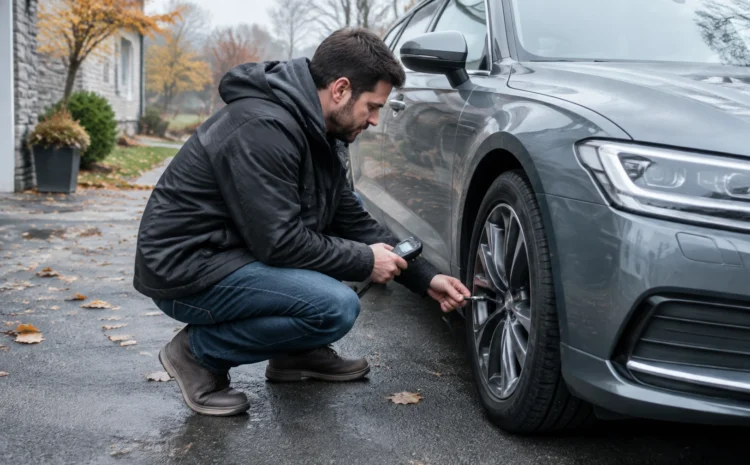
Use a reliable pressure gauge before driving, if possible. If the vehicle has already been driven, let it sit for about three hours so the tires can cool before checking. The National Highway Traffic Safety Administration (NHTSA) recommends following the vehicle manufacturer’s cold-pressure guidance.
Check each tire, not just the one that looks low. A pressure gauge gives you a more useful reading than judging a tire by appearance.
3. Use the vehicle’s recommended pressure
Look for the tire-pressure label, usually on the driver’s doorjamb, or check the owner’s manual. Inflate the tires to the vehicle’s recommended cold pressure.
Don’t use the maximum PSI printed on the tire sidewall as your target. That number refers to the tire’s maximum pressure limit; it isn’t necessarily the right inflation pressure for your vehicle. As Michelin explains, the vehicle placard or owner’s manual is the place to find the recommended pressure.
If you check the tires after driving, the readings may be higher because the tires have warmed up. Avoid letting air out of a warm tire just to match the cold-pressure number. Recheck it once it has cooled.
4. Recheck the tires and watch the warning light
After inflating the tires, use the gauge to confirm the pressure. Depending on your vehicle, the TPMS may take a short drive to update or the system may require a reset procedure described in the owner’s manual.
If the warning returns, one tire may be losing air. Check the pressure again when the tires are cold and arrange an inspection if it’s dropping.
When the Light Could Mean More Than Cold Weather
A temperature drop can trigger the TPMS warning, but it isn’t the only possible cause.
A slow leak or puncture
If the same tire keeps losing pressure, it may have a puncture, a leaking valve, or another issue. A small leak may not cause an immediate flat, but it can leave the tire underinflated again after you add air. Have a tire that repeatedly loses pressure checked rather than topping it up indefinitely.
A flashing TPMS warning
The warning light’s behavior can offer a clue. On many vehicles, a TPMS light that flashes for a short time after start-up and then stays on signals a system problem, such as a sensor or communication fault, rather than just low tire pressure. The exact pattern can vary, so check your owner’s manual for your vehicle’s instructions.
A sensor issue doesn’t confirm that your tires are properly inflated. Check the pressure with a gauge, then have the system inspected if the light continues to flash or behave unexpectedly.
A light that stays on after inflation
If you’ve set the tires to the specified cold pressure and the light remains on, give the system time to update and consult the owner’s manual. If it still doesn’t clear, or comes back, ask a mechanic to check for a tire leak or a TPMS fault.

Why Correct Tire Pressure Matters
Proper inflation supports the way your tires meet the road. When pressure is too low, tires can flex more than intended, heat up, wear unevenly, and affect steering and braking. Underinflation can also increase rolling resistance, which may reduce fuel economy. Overinflation can contribute to uneven tread wear and a harsher ride.
The goal isn’t to add as much air as possible; it’s to keep the tires at the pressure specified for your vehicle. Regular checks are a simple part of preventive maintenance, especially as temperatures shift through fall and winter.
Make Pressure Checks Part of Your Seasonal Routine
Don’t wait for the TPMS light to remind you. Check your tire pressure about once a month and when the weather changes sharply. A quick check before a longer drive can also help you catch a gradual pressure loss early.
Drivers in Shippensburg and surrounding areas can add tire checks to the same routine as other maintenance, such as an oil change. It’s a small habit that can help you spot tire issues before they become more disruptive.
If your warning light keeps returning, a tire looks low, or you’re unsure how to interpret a flashing indicator, get the situation checked instead of guessing. Dettwiler Brother’s Repair provides automotive care for all makes and models, with clear communication to help you understand the next step.
For dependable auto repair in Shippensburg, PA, contact Dettwiler Brother’s Repair at 717-530-7555, or schedule an appointment. A quick pressure check today can help keep your tires ready for the colder miles ahead.